
Which South Bali Stop Would Win Your Camera Roll

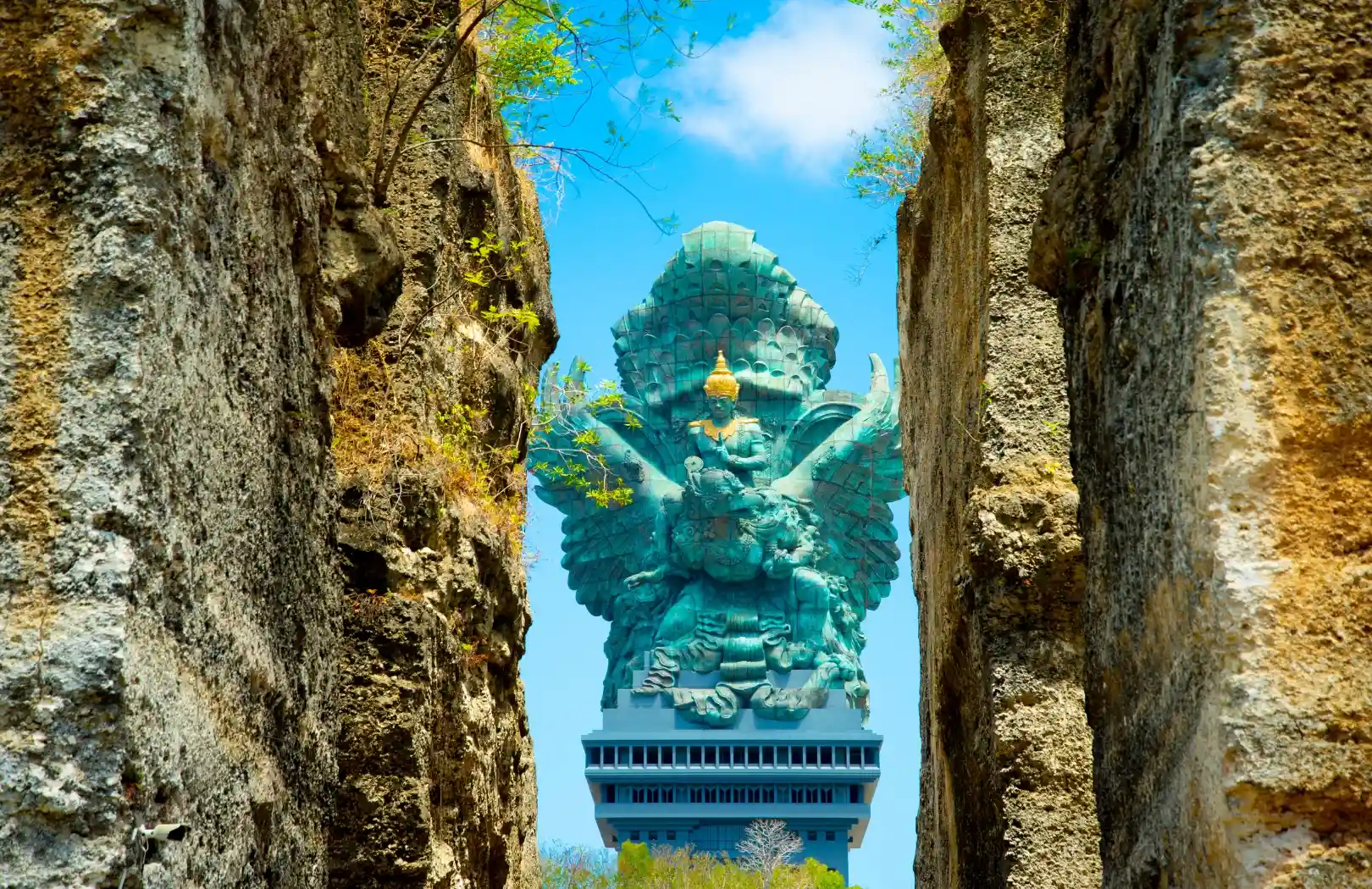
A South Bali route can change your camera roll several times in one day.
You may start with a giant cultural statue, move through limestone roads, stop at two different beaches, and finish beside a cliffside temple overlooking the ocean. Each destination creates a different type of photo, which makes choosing one visual winner more difficult than expected.
Some travelers will vote for the scale of the GWK statue. Others will choose the road leading into Melasti Beach, the coastal setting of Pandawa Beach, or the cliff views around Uluwatu Temple.
A private route connecting these South Bali attractions gives you the chance to compare them without arranging separate transportation between every location.
So, which stop would win the most space in your camera roll?
Contender 1 GWK Cultural Park for Monumental Scale
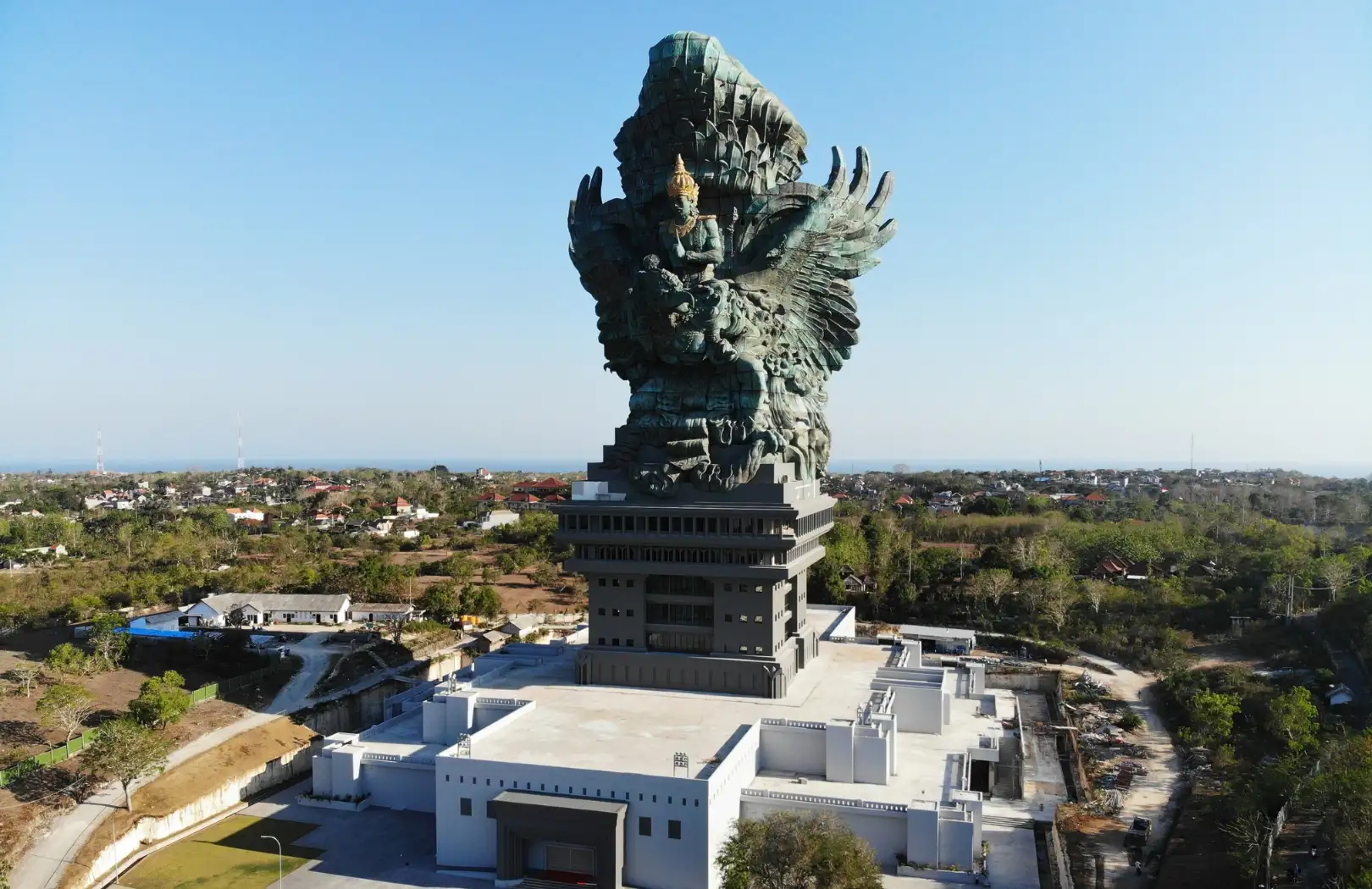
GWK Cultural Park enters the competition with one major advantage: size.
The Garuda Wisnu Kencana statue immediately changes the visual scale of the day. Instead of photographing a small detail or narrow landscape, you are working with a large cultural landmark that can dominate the frame from several viewpoints.
The GWK statue is likely to appeal to travelers who enjoy:
- Wide architectural photos
- Large cultural landmarks
- Symmetrical compositions
- Group photos with a recognizable background
- Images that show scale clearly
One challenge is fitting the statue into the frame without losing the people or surroundings beneath it. A wider composition can help show the size of the monument, while a closer angle can highlight the structure and details.
GWK also offers more than one photo setting. Open plazas, sculptures, cultural spaces, and elevated parts of the complex can create different visual options depending on which areas are accessible during the visit.
The strongest camera-roll strategy is not taking the same photo repeatedly from one location. Try one wide image, one closer architectural composition, and one photo that includes a person for scale.
GWK may win if your travel photos are built around major landmarks rather than beach scenery.
Contender 2 Pandawa Beach for the Coastal Arrival
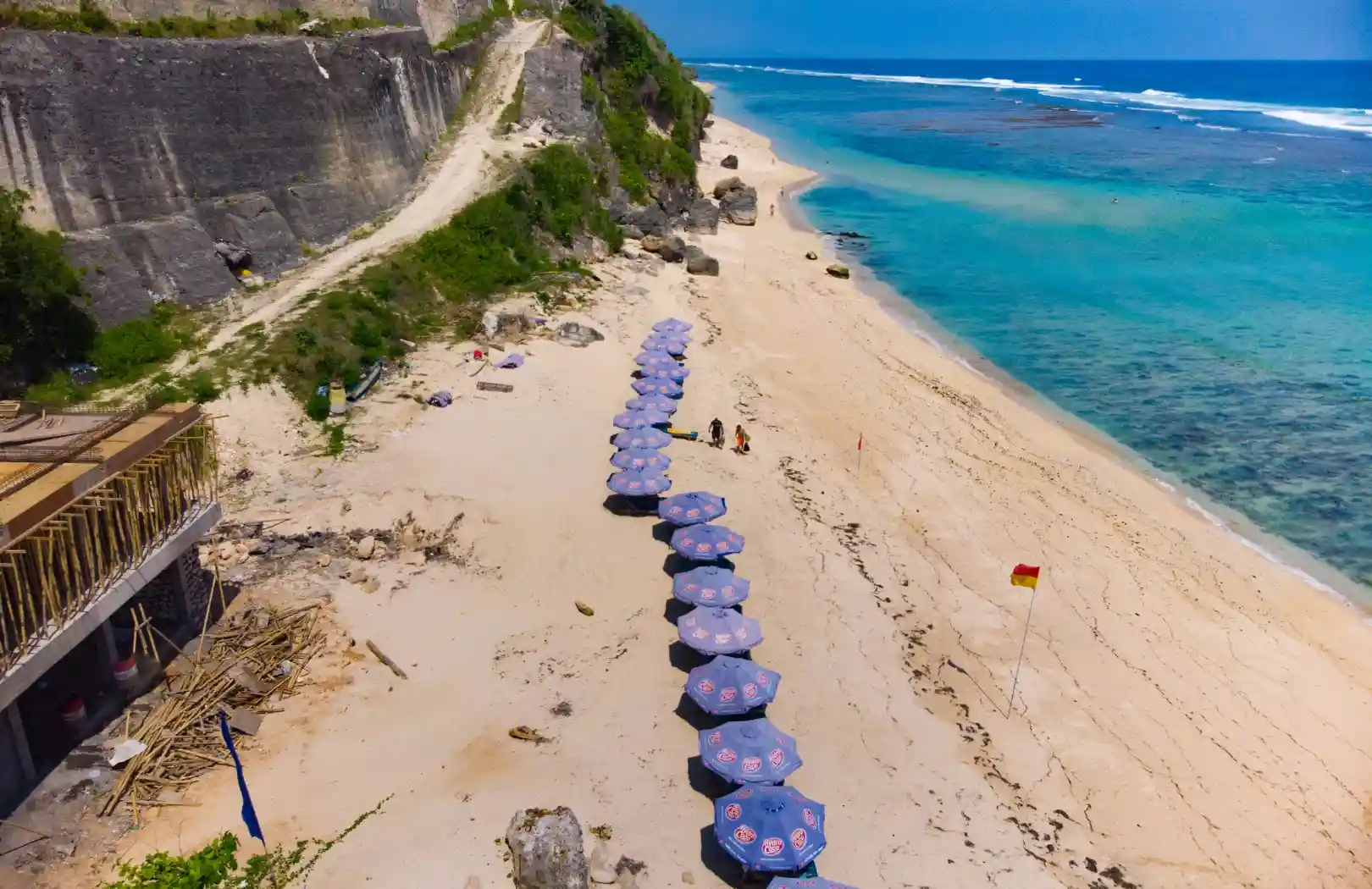
Pandawa Beach does not wait until you reach the sand to make an impression.
The approach through limestone cliffs creates the first major visual shift after the cultural setting of GWK. The road, rock walls, and opening toward the coastline provide several layers for photos before the beach itself becomes the main subject.
Pandawa Beach photos may include:
- Limestone cliff roads
- Wide shoreline views
- Beach portraits
- Ocean backgrounds
- Coastal walking moments
- Images taken from higher viewpoints
The beach can look different depending on tide, weather, light, and visitor conditions. It should not be described as always empty, calm, or suitable for swimming.
A cloudy day may create softer light. A brighter day may produce stronger contrast between the cliffs, sand, and ocean. Neither result is guaranteed, and both require different camera settings.
Pandawa may win your vote if you like photos that show the transition from road to coast.
It is also a strong choice for travelers who want one recognizable beach stop without turning the entire day into a long beach session.
Contender 3 Melasti Beach for the Limestone Road
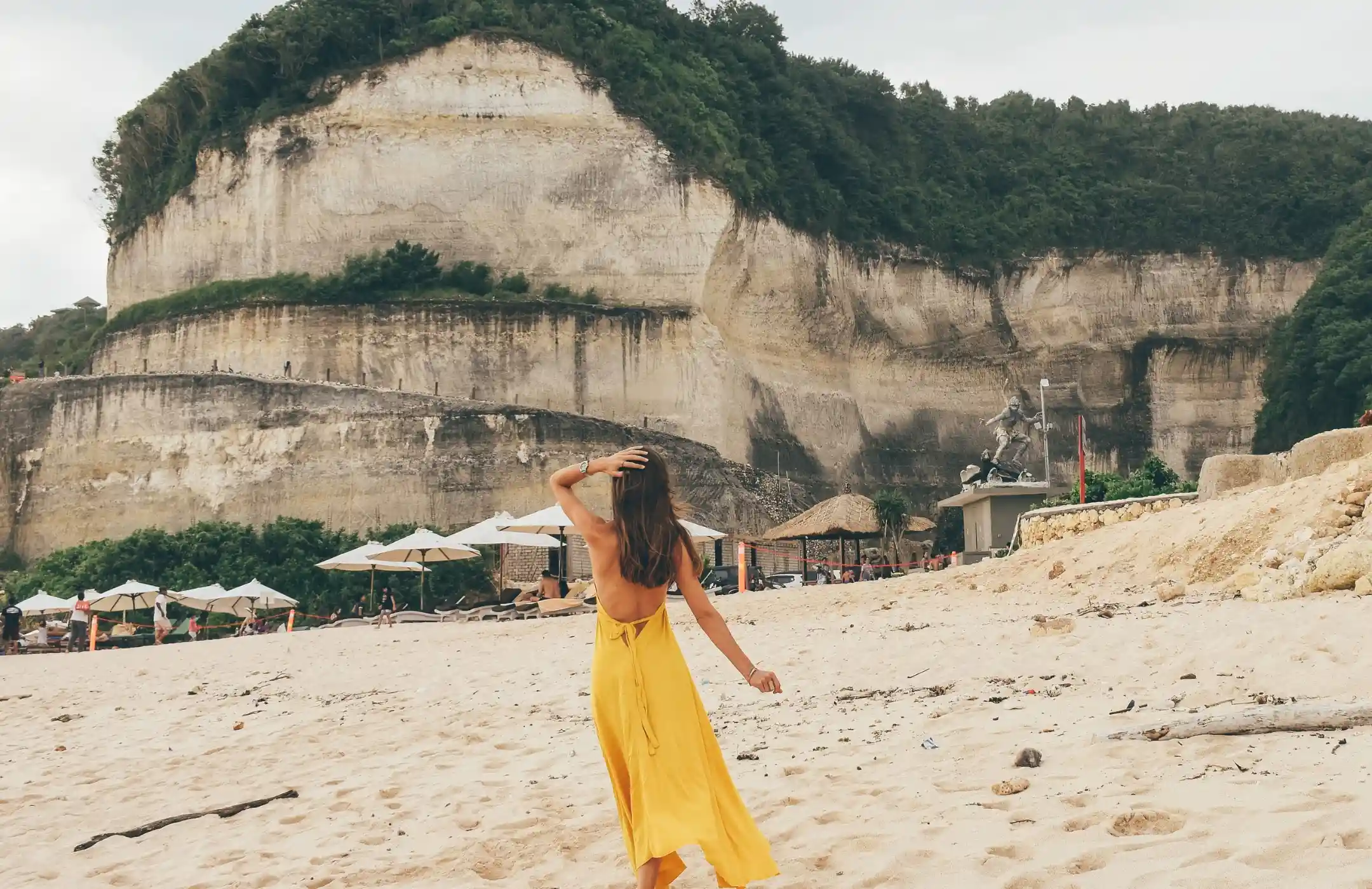
Melasti Beach enters the competition through its approach.
The descending road between limestone cliffs is one of the most recognizable visual elements of the area. The curves, rock walls, and opening toward the coast give photographers a stronger sense of movement than a standard beach entrance.
Melasti Beach photos often work well when they include:
- The limestone access road
- Vehicles moving through the cliffs
- Wide coastal views
- Beach portraits
- Rock formations
- The contrast between road and ocean
Melasti and Pandawa should not be photographed as though they are the same stop.
Pandawa may be stronger for broad shoreline views and the experience of emerging through the cliffs toward the beach. Melasti may stand out through the road design, deeper limestone cuts, and more dramatic arrival sequence.
The most effective images are often created before reaching the main beach area. Looking back along the road or using the cliff lines to guide the eye can make the location feel more distinctive.
However, visitors should avoid standing in unsafe road positions or blocking vehicle access to capture a photo. Use designated stopping areas and follow local instructions.
Melasti may win if your camera roll is built around roads, cliffs, and visual depth rather than only sand and water.
Contender 4 Uluwatu Temple for Culture on the Cliff
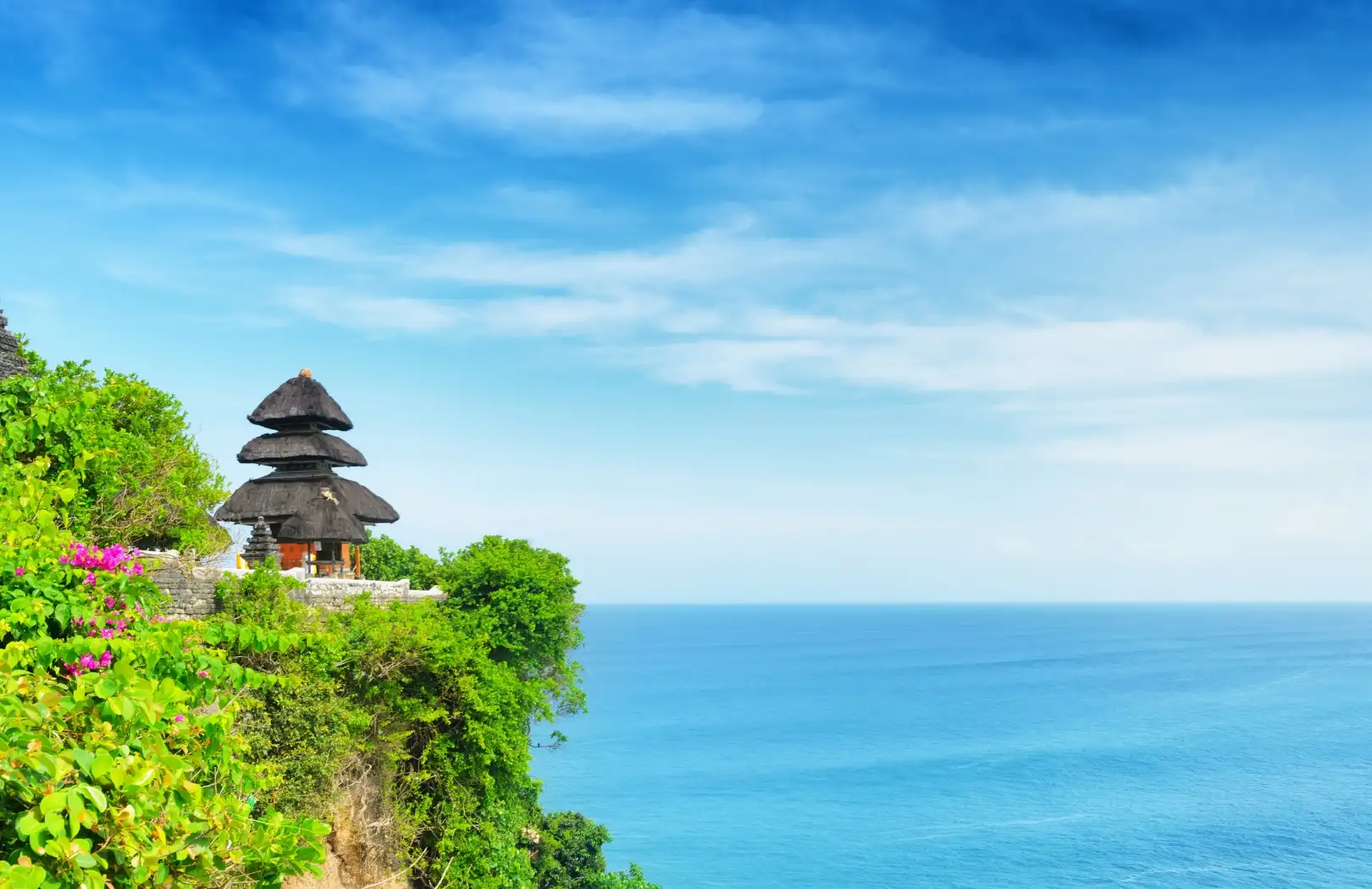
Uluwatu Temple combines two strong visual categories in one place: sacred architecture and the ocean.
The Uluwatu cliff view creates a very different composition from the beaches. Instead of standing near the shoreline, visitors can see the coast from higher walking paths around the temple area.
A private Uluwatu tour may give travelers time to photograph:
- Temple gateways
- Cliffside pathways
- Ocean views
- Traditional architectural details
- Coastal rock formations
- Monkeys from a respectful distance
- The relationship between the temple and the landscape
The temple’s strongest photos do not always require a sunset.
Clouds, afternoon light, mist, or changing ocean conditions can also create distinctive images. Sunset should never be guaranteed because weather, traffic, arrival time, and cloud cover can all affect the view.
Uluwatu may win the camera-roll competition because it offers more than one subject within the same area. You can move between architecture, cliffs, ocean, and wildlife without leaving the temple complex.
The visual variety is strong, but cultural respect must remain more important than the photo.
How to Take Temple Photos Respectfully
Uluwatu Temple is an active sacred site, not a photography set.
Visitors should follow current clothing requirements, including the use of a sarong and sash where required. Areas used for ceremonies or worship should never be blocked for a photo.
Respectful temple photography means:
- Do not interrupt prayer or ceremonies
- Do not stand directly in front of worshippers
- Do not enter restricted areas
- Do not climb temple structures
- Do not place bags or equipment on offerings
- Avoid loud posing or disruptive behavior
- Ask before photographing people closely
- Follow instructions from temple staff
The strongest cultural photos usually come from observing the setting rather than forcing a staged moment.
Monkeys are also present around parts of the temple area. Avoid feeding, touching, teasing, or attempting to hold them. Phones, sunglasses, hats, and other loose belongings should be secured.
Wildlife behavior cannot be predicted. A monkey appearing in your frame should be treated as an unplanned moment, not something to be encouraged through unsafe interaction.
Contender 5 The Ocean Views for the Minimalist Photographer
Some travelers may decide that the real winner is not a specific attraction.
It is the ocean.
South Bali’s coastline appears differently at Pandawa Beach, Melasti Beach, and Uluwatu Temple. At the beaches, the ocean sits close to the viewer. At Uluwatu, it becomes part of a larger cliffside landscape.
Ocean photography may appeal to travelers who prefer:
- Clean compositions
- Open horizons
- Natural movement
- Fewer visual distractions
- Wide vertical or horizontal frames
- Silhouettes when the light allows
The ocean will not look the same throughout the day. Tide, wind, waves, clouds, and sunlight can change the color and texture of the water.
No beach tour should guarantee calm water, a clear horizon, or a specific shade of blue.
The advantage of a Bali beach day trip with several coastal stops is that you are not relying on one beach to provide every photo. If the light or conditions are less suitable at one location, the next stop may offer a different angle.
The Camera-Roll Ranking
Choosing one winner depends on your photography style.
Best for Monumental Scale
GWK Cultural Park
Choose GWK if you like large landmarks, architecture, and images that immediately identify the destination.
Best for the Beach Arrival
Pandawa Beach
Choose Pandawa if you like the transition from limestone cliffs to a broad coastal setting.
Best for Road and Cliff Composition
Melasti Beach
Choose Melasti if you prefer curved roads, rock walls, and layered visual depth.
Best for Culture and Ocean in One Frame
Uluwatu Temple
Choose Uluwatu if you want sacred architecture, cliff paths, and coastal views in one location.
Best for Minimalist Travel Photos
The South Bali Ocean
Choose the ocean if you prefer clean horizons, movement, and open scenery over landmark-focused images.
What to Bring for a Photography-Focused South Bali Day
A full day around these South Bali attractions can involve heat, walking, beach conditions, and changing light.
Useful items include:
- Fully charged phone or camera
- Portable charger
- Extra memory card
- Lens cloth
- Waterproof phone pouch
- Secure camera strap
- Sunscreen
- Hat
- Drinking water
- Comfortable walking shoes
- Beach sandals
- Light change of clothes
- Small towel
- Secure day bag
Sand and saltwater can affect cameras and phones. Avoid changing lenses directly on the beach when wind is carrying sand, and clean equipment carefully before storing it.
Around Uluwatu, secure loose accessories because of the monkeys.
Why a Private Tour Makes the Visual Route Easier
Private transportation connects GWK, Pandawa Beach, Melasti Beach, and Uluwatu Temple without requiring separate ride bookings after every stop.
This is useful for travelers carrying camera equipment, extra clothing, chargers, and beach essentials. Personal items can remain in the vehicle between stops, subject to the driver’s guidance and normal precautions.
A private vehicle also means the route is arranged for your own booking rather than a large group. You do not need to wait through unrelated hotel pickups or follow a crowded group schedule.
However, private pacing does not mean unlimited photography time.
Spending too long at one location may reduce the available time at the next stop. Traffic, attraction hours, weather, Kecak Dance arrangements, and route feasibility still affect the schedule.
The itinerary should balance photo opportunities with realistic travel time.
Which South Bali Stop Gets Your Vote
GWK delivers scale.
Pandawa brings a coastal entrance through limestone cliffs.
Melasti turns the road itself into part of the photo.
Uluwatu combines temple architecture, cliffs, and ocean views.
The ocean connects all three coastal stops but looks different from every angle.
Which location would win your camera roll: the GWK statue, Pandawa Beach, Melasti Beach, or Uluwatu Temple?
Share your choice with your travel partner, then send Bali Regal Tour your travel date, hotel area, number of guests, and preferred package option to check availability for a private South Bali day trip.
Latest Article


Why Travelers Trust Bali Regal Tour
Trusted Local Operator
Experienced and reliable, offering the best private and group tours in Bali.
English-Speaking Guides
Friendly local guides who speak fluent English and know Bali inside out.
Customizable Tours
Flexible Bali tour packages tailored to your schedule and interests.
Safe & Hassle-Free
Comfortable transport, clear pricing, and full support from start to finish.